Elf Obsessed: A Window into Autism

Our elf on the shelf experience encapsulates a lot about our journey with autism.

When Jesse was around four, my sister bought him a boy Elf on the Shelf. She’d gotten one for my nephew and wanted to spread the magic to our family too.

I wasn’t a big fan. I’ve always been of the snitches get stitches mindset when it comes to these little overpriced spies. But it was a thoughtful gesture, so I went along with it.

It’s funny how the typical things you never even wanted can still make you sad with autism in the picture.
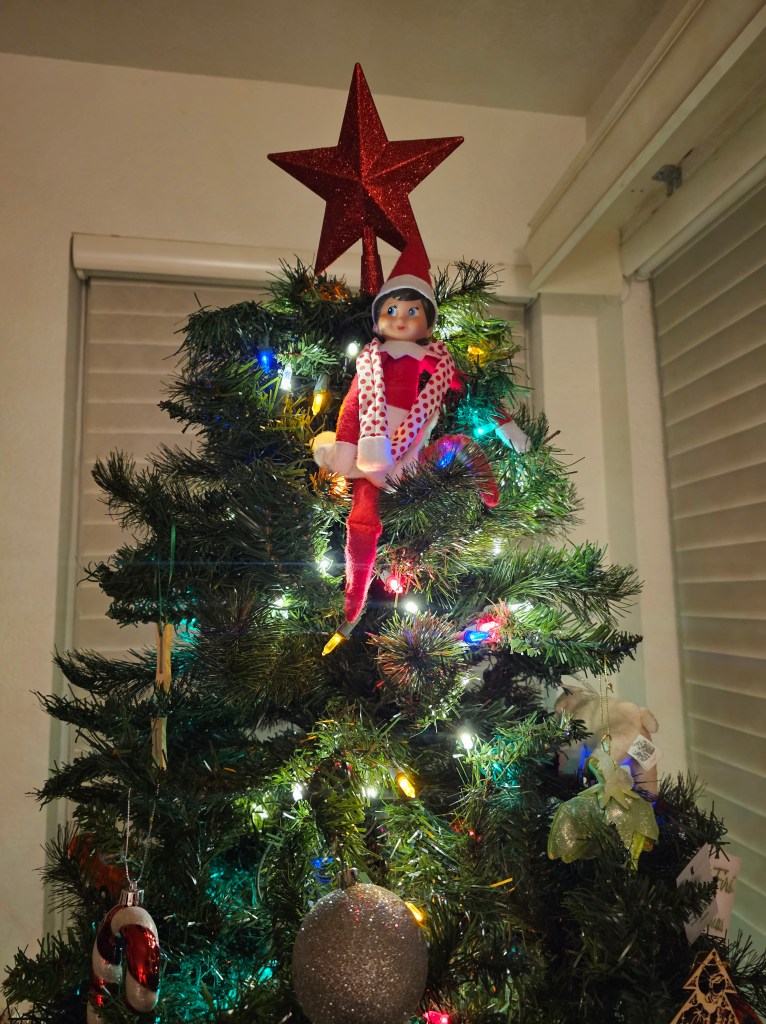
That elf could’ve come to life, danced on Jesse’s head, and he wouldn’t have cared.

Most nights, I forgot to move it—not only because I’m lazy but also because he barely noticed its existence.

He wasn’t interested in finding it perched in silly spots or concerned about its supposed reports to Santa. At the time, we were lucky if we could get him to open his gifts, let alone engage with holiday traditions.

The elf became a sad reminder that our Christmases, like much of our lives, didn’t look like everyone else’s. Joy didn’t come easy. It couldn’t be bought or orchestrated.

Eventually, I gave the elf away to a family member and moved on.

Fast-forward a few years to last Christmas, when we decided to try the elf again. This time, it was for my daughter, who wanted one because her pal—my nephew—still had his.

And so, Isabelle the elf entered our lives.

But things are different now. Jesse is more aware. He loves Christmas. And, like with so many other parts of our lives, that awareness has brought a new layer of rigidity, exactness, and obsession.

He slowly became more and more excited about the elf last year. He stored everything about it in his mind, sitting there, waiting for this year.

The last few weeks leading up to December were filled with Jesse’s looping questions:

“Is the Elf on the Shelf coming in December?”

“Is the elf in the North Pole?”

“Where’s Isabelle?”

He couldn’t let it go. Now that Isabelle is here, he watches the Elf on the Shelf movies, videos, and flips through the book constantly. Last night, he insisted we go to the store to look at all the different elves. We’ve been practicing going out, and I want to honor his interests, so we went.

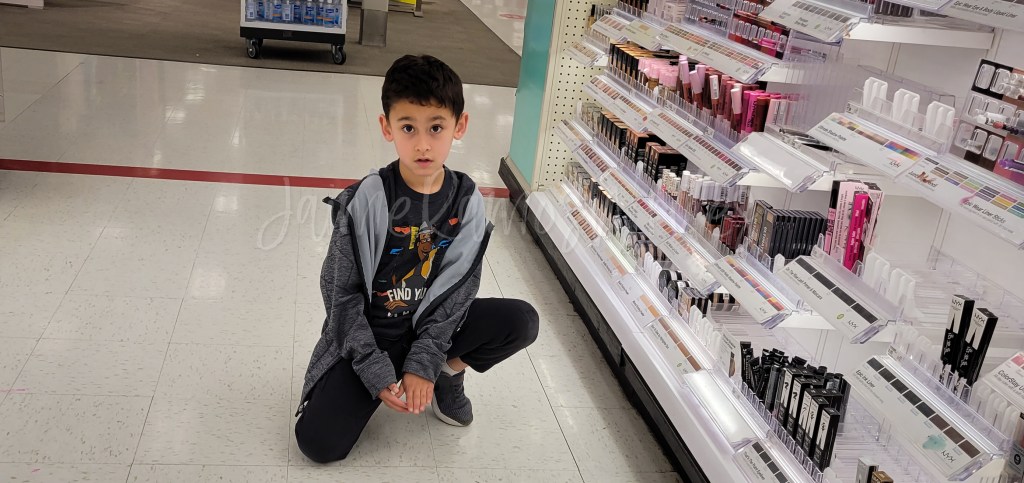
So there we were—just a mom and her cute, curly-haired boy, standing in the same aisle at Target for an hour while he examined each elf over and over again. He lined them up, checked to make sure they all had their books, inspected each one, and repeated the process. He made sure to show me the boy elf, which I know he now actually wants.

This is our new normal with autism. Jesse’s growth in awareness and communication has been incredible, and I’m deeply grateful for it.

But with that awareness comes anxiety and perseveration. We jump from one obsession to the next, never knowing when one will resurface and take over our lives again.

We do our best to always join him in his interests, using them as opportunities to teach and explore something new within their realm. Like his passion for It’s a Small World which has spread to maps and travel.

Some of our most beautiful moments of joy and growth come from these pockets of obsession. But it can also be exhausting when he can’t let go, when the questions repeat endlessly, and when the fixation morphs into all-consuming anxiety and sadness. When some things just aren’t available or possible.

It’s hard to describe, but this is where we often find ourselves. I’m so grateful to know what he loves and to have him share it with me now, but it’s also hard to navigate. Most of all, it’s heartbreaking to watch the things he loves sometimes take over.


Hope, Health, and Belonging: Why Vulnerable Children Need Our Support

Raising a child with autism and another with a blood disease has changed how I see the world. It’s put me in categories I never imagined. It’s shown me, over and over, who the world caters to and who continually gets left behind.

Our lives revolve around costly medications, doctor visits, therapies, school meetings, and careful planning. Constant adjustments and preparations to make sure our children can thrive in a world that often feels stacked against them.

I’ve learned to see public policies and social norms with new eyes, aware that so many decisions directly impact my children’s ability to simply participate in society with dignity and safety.

For our child with autism, laws like the Individuals with Disabilities Education Act (IDEA) and the individualized education program (IEP) it provides aren’t just beneficial; they’re essential.

Without these protections, my child’s educational path would look vastly different, likely marked by misunderstanding and inadequate support rather than the meaningful growth every child deserves.

Government programs like Medicaid waivers and community-based support are also life-changing.

These programs don’t just provide opportunities and resources, they create a sense of belonging and dignity that my son might otherwise miss.

Similarly, my daughter’s blood disorder demands extensive medical attention, treatments, and costly medications.

Access to affordable healthcare and vital protections ensure that she can live without the constant fear that these lifelines could disappear.

When these essential supports are viewed as “extras” or as costs to be trimmed, it feels as though the world is dismissing my children’s basic right to live and thrive. I’m scared this is where we’re headed. I’m scared they’ll be forgotten.

Without these protections, our children would face even more obstacles in a world already designed without them in mind. I wish others could see that these resources don’t just help my children, they reflect our humanity and belief in equity.

I don’t know where we are heading and I hope I’m wrong. But I feel like so much of this is now threatened.

Removing these safeguards not only risks isolating and harming individuals but also fundamentally changes the positive direction I feel our society has been moving in.

I hope the policies and laws that protect the vulnerable will not only be preserved but strengthened. I hope there’s a lasting commitment to ensuring that every person, every child, has the chance to be included, valued, and safe, with access to the healthcare and education they need.

For families like mine, this isn’t just a matter of politics. It’s about survival, dignity, and the hope that each of our children has a rightful place in this world.

I love these two so much. They deserve health, happiness and too belong. My only wish as a mother is that our country, government and community see that they deserve those things, too.

Anxiety Is Like a Little Monster

Let’s talk about anxiety for a minute. Not just anxiety, but anxiety and motherhood.

I’ve had anxiety my whole life. I just didn’t realize what it really was until I had my children. It’s tangled up in so many other emotions like, guilt, grief, sorrow, anger, etc. It wraps around and is the reason for both my productivity and my procrastination. It echoes in my insecurities and thrives in sleepless nights.

Several years ago, I started working on processing what I can and cannot control. It’s become one of my many tools. I’m constantly reminding myself to let go of what I can’t control and focusing on what I can. 

But in the last couple of years, I’ve struggled to use that tool. I’ve come to realize that motherhood has a way of expanding the things I can’t control, and tricking me into wanting to control too much. My anxiety thrives in this dilemma. I often live in fear because the stakes feel so high.

My son has autism. I can’t control autism. I can’t make his brain work in a way that keeps him safe all the time. So, I try to control everything around him, but as he grows, like with any child, that becomes less and less possible. And all the while, he grows, and his wants and needs stretch beyond my reach.

My daughter has a more severe version of a blood disease. If I could give my left arm to make it go away, I would. And if I’m being honest, a truth I know I’ll be judged for, sometimes, I want to keep her in a bubble. Every bump, fall, or scratch shakes me to the core. I worry for her most when she’s away from me.

The future is where I feel the most out of control. The inevitable unknown. People tell me not to worry about it until it comes. But when you’re dealing with disabilities and medical needs, it doesn’t work that way. It’s a constant balancing act between preparing and not obsessing over it—and I’m no good at finding that balance.

I don’t tell my 9-year-old son that he may never drive the cars he loves, get married like they do on the shows he watches, or live on his own. I don’t tell my 6-year-old daughter that it may be too dangerous for her to play many sports, or that she might not be able to travel to places that can’t help her, or that having children could be too risky.

Instead, I hold these secrets for them. I tuck them into my heart, cloaked in anxiety. I know it’s no place to live, in the worry.

Anxiety is like a little monster, heavy and restless, curled up in the pit of my stomach. Some days, it doesn’t even bother me.Others, it creeps up slowly to my heart, clinging for dear life, making my head spin with worry. Then there are the times it’s triggered by something like a meltdown, a fall, teachers note, a bloody nose, etc. Then it jumps up, big and loud, settling in my mind for days.

I have my tools. I work on all the things I know that help, but even those change. It all ebbs and flows, just like everything in motherhood—the worry, the love, and the letting go. I try to remind myself—I’m doing the best I can, and that’s enough. Maybe then, I can keep the beast at bay.

Saying Goodbye to Five

I make it a point to spend time lying with my kids at bedtime on the eve of their birthdays. It’s a special moment for me to cherish the final moments of them at that age, to cuddle them and hold onto a fleeting moment in time.

Tonight, I lay with my little sweet girl. We listened to a couple of songs and talked about our day. I told her how much I love her, and she squeezed me tight with those five-year-old arms for the last time before settling in for sleep.

As we prepared for her to drift off, I asked, “Are you excited to turn six tomorrow?”

My daughter, who has been eagerly anticipating her birthday all day, the one who loves singing pop and rock songs like she’s twelve and dreams of being tall enough to ride every roller coaster, surprised me with her reply.

She burst into tears.

Immediately, I held her close, and we cried together. Nestled against my chest, she sobbed, “I don’t want to grow up.”

I let her cry, allowing her to feel her emotions without undermining them. I didn’t dare admit that I felt a little the same. That life does become more and more complicated as we grow, and that is hard.

After a few tears, I told her how proud I am of her, how she inspires me every day, and how I have loved every version of her. I assured her that I couldn’t wait to meet the six-year-old version of her.

I am constantly amazed by this little girl. She is brave and strong, facing her challenges even though I know it’s and struggle.

She is creative and thoughtful; her mind is always racing with ideas and thoughts that astound me when she shares them.

She is kind and caring, always thinking of her brother and cherishing her friendships.

She is so much I never have been, and I love that about her.

Tonight, we said goodbye to five, and it was bittersweet. But I know she will be an amazing six-year-old.

After finding a lighter mood and just before she finally closed her eyes, we held hands, and she said, “I am excited for my birthday tomorrow.”

We decided to take one last picture of her as a five year old.

I Can’t Say “I Hate Autism”

I can’t say “I hate autism” anymore. I haven’t said it much, but I have.

There are moments when I desperately want to be angry at autism—during a colossal public meltdown, the relentless screaming in the car, when things get broken at home, or worse, when my son can’t cope and it seems like something else has a hold on him and won’t let go.

I want to hate it. I want to blame this invisible force that seems to inhabit our lives and shadow us everywhere. I know many parents and individuals in this situation do. I understand them. I understand the need to channel the anger and frustration somewhere. I don’t judge them at all. This is just a choice I needed to make.

It’s just a word. A label. An all-encompassing explanation for millions of individuals who might need it to access resources or better understand themselves. No two of these remarkable individuals are the same; they just share one or many things in common—they are autistic.

Before the diagnosis, when I first heard the possibility of autism in reference to my son, I saw it as something to avoid, something to flee from. I wanted it away from him. Whenever he exhibited a sign, I would panic. I hated looking back and recognizing signs that I or the doctors had missed.

I often write about acceptance and how it’s an ongoing journey never fully reached. You fall backwards all the time in this life. The moments that I do find a bit of it, and the progress I have made, have been transformative.

One of the most the important steps I took was realizing that I can’t separate autism from my son. If the things he does and the way he develops are defined under autism, then I can’t declare I hate it—it is part of him.

It’s intertwined in everything he does: the silly things, the sweet things, and all of the challenging things. It’s how he sees the world. How he interacts with everyone and everything.

When my son has one of those really tough days, after a harrowing meltdown where I’m left feeling shattered, I can’t just blame this burden, this “thing” called autism.

Because in front of me, there is also a little boy struggling, trying, and equally broken by the moment.

It wasn’t autism who had that moment—it was him. One of the people I love more than anything in the world. The person who needs me most in the world.

I can’t hate that because, to me, it is part of him. There is no cure. It’s not going away. I can only help him navigate through it. I can only be there and try to guide him.

Being angry at autism was not the answer for me. Accepting that my son has these trials, that my son needs more, that my son has difficult and beautiful moments, has brought me a small sense of peace.

Autism: The Burden He Bears

When I think about that little newborn baby—the first one I birthed, the first true obsession of my life—I recall the haze of sleepless nights and the excitement of new life.

Babies are so raw and new; they wholly need you. You carry them and everything they will one day become. The fears, the worries, the hope, the determination.

Looking at that tiny being, my expectations were simple: health and happiness. He matters merely because he exists, and to exist is a miracle on its own.

But that little baby, who challenged me in countless ways, also faced trials of his own. From the moment he entered this world, Autism became his companion, his burden.

Some people call it a gift, and some call it beautiful. I am here to say it can be those things, but it is also a burden. It is his burden to bear, he has from day one.

The moment he entered this world, it weighed on him. He emerged from my womb into a world ill-prepared for him, a world quick to judge and slow to understand.

As a mother, I do my best to fix that. Not to change him, but to change the world’s perception of him. A different way of seeing him. The beauty of his perspective, the depth of his love.

But at the end of the day, it’s his burden to bear. He has it harder than most, and has from day one. That can break a mother’s soul. I watch others. The looks they give us. They judge us and they judge him. A child.

And as he grows older, the weight of society’s expectations presses down harder. He feels it, the stares, the whispers, the unspoken judgments, the other children’s laughs. He doesn’t understand why. And to be honest, some days I don’t either.

We push our way through the world. His struggle is loud. It’s lonely. It’s awkward. It’s temperamental. It doesn’t fit their narrative.

There are many days I write about the beauty in what autism brings. The strength it’s built. The resilience that blooms. Today though, I validate that it is a burden. Today, I look at the 9-year-old who once was a tiny newborn. To the boy who carries a weight that threatens his health and happiness.

How to Help a Friend Who’s Child is Diagnosed with Autism

I am often asked what to do or say to a friend who’d child is going through a diagnosis or just in general for a friend grappling with the reality of autism and everything it brings to the table.

It’s understandable to feel uncertain, and even fearful of saying the wrong words.

I wish I could give a foolproof solution, a one-size-fits-all response. However, what one person finds comforting might not resonate with another. But, you can always listen to someone. You can always be there for them. You can always withhold judgment.

Your friend may not find solace in clichés like “everything will be okay” or “it could be worse” when they’re in the thick of grieving what never was but could have been. Maybe at some point they will want to hear those things but listen to them. See where they are at and meet them there.

Sometimes, the greatest gift you can give is acknowledging their emotions, let them know they are not alone. Validation can be healing. Reminding them that their feelings are valid and understood.

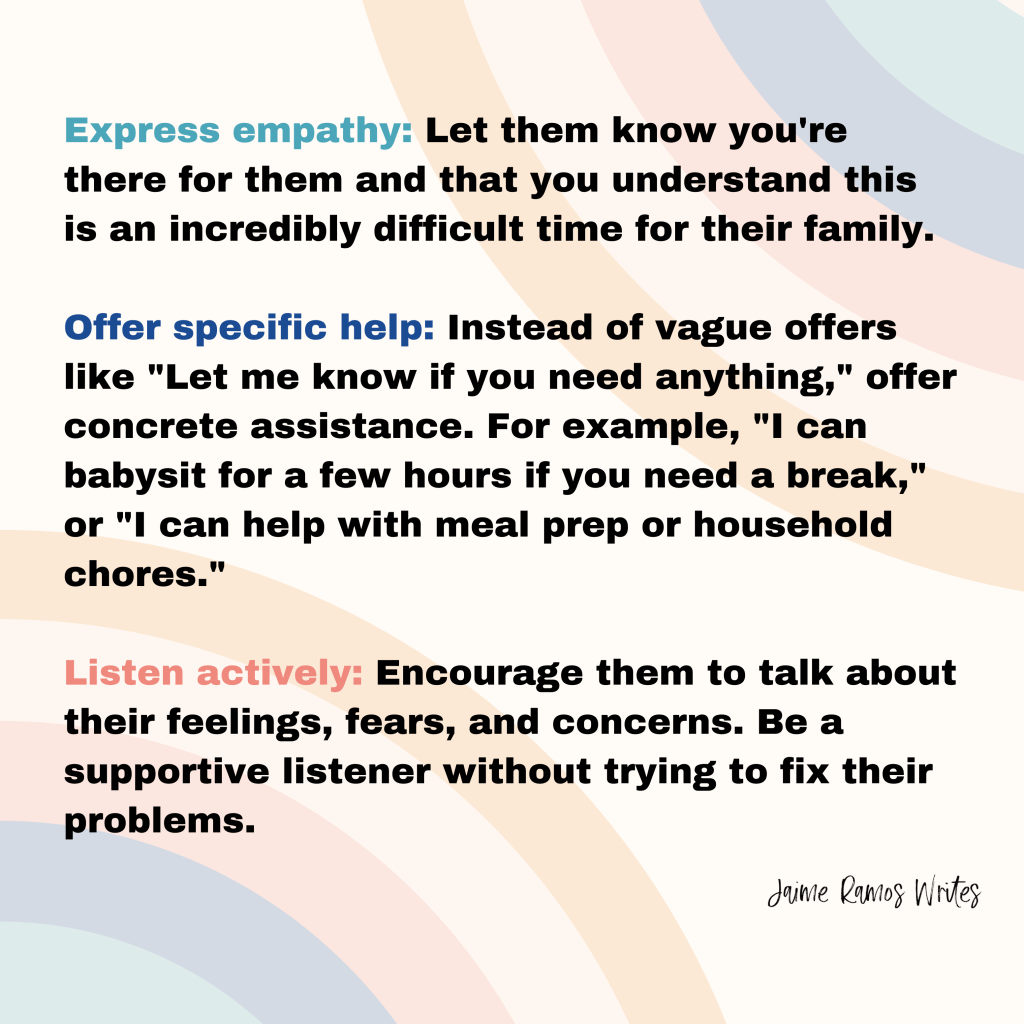
Below I’ve put together some tips that I think really help.

When You Feel Like You Just Don’t Belong Anywhere

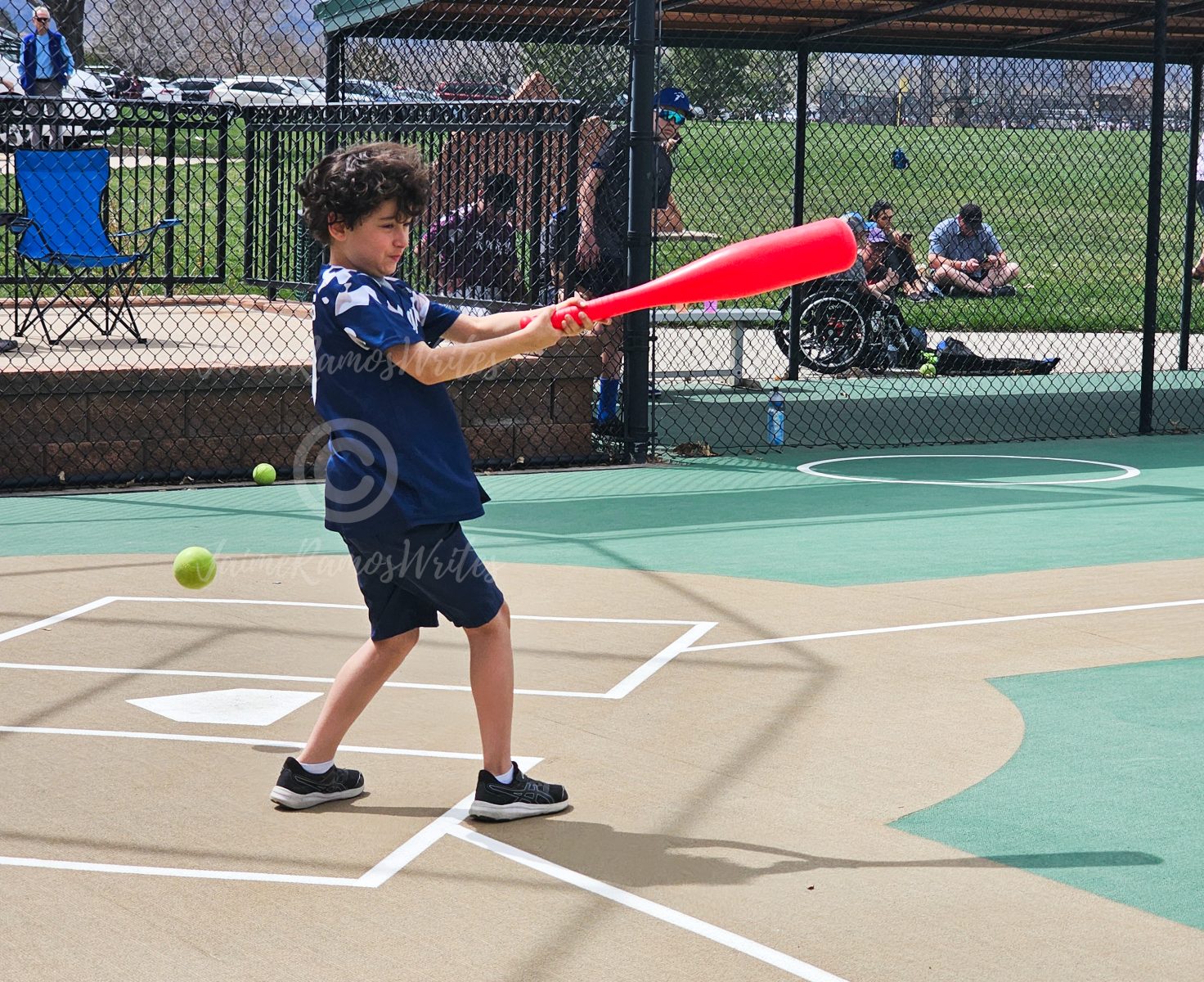
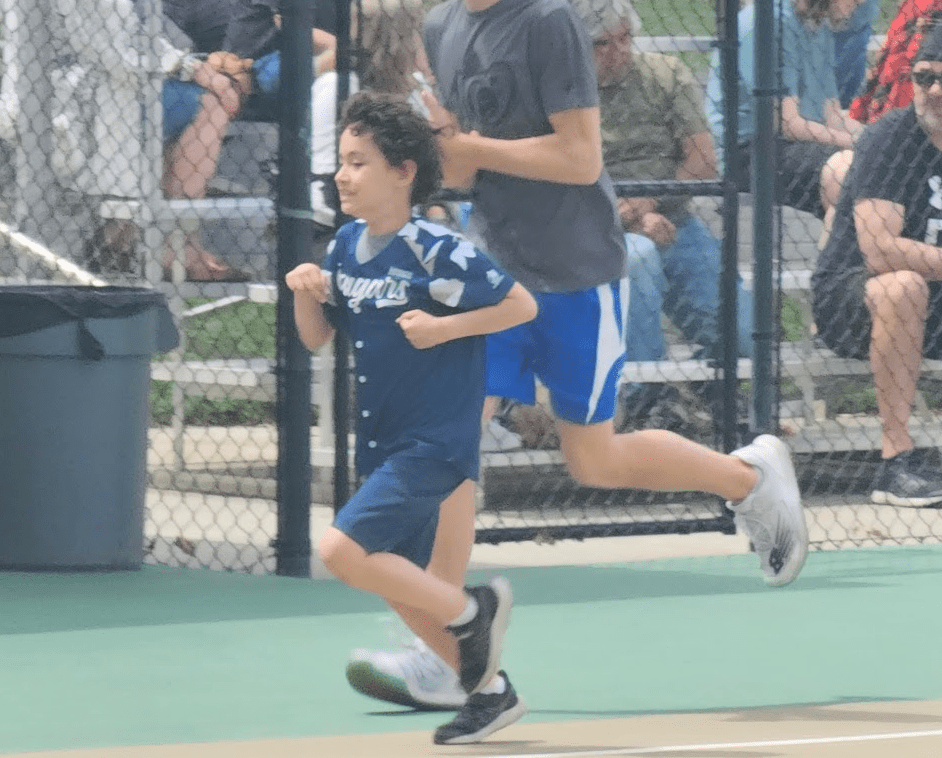
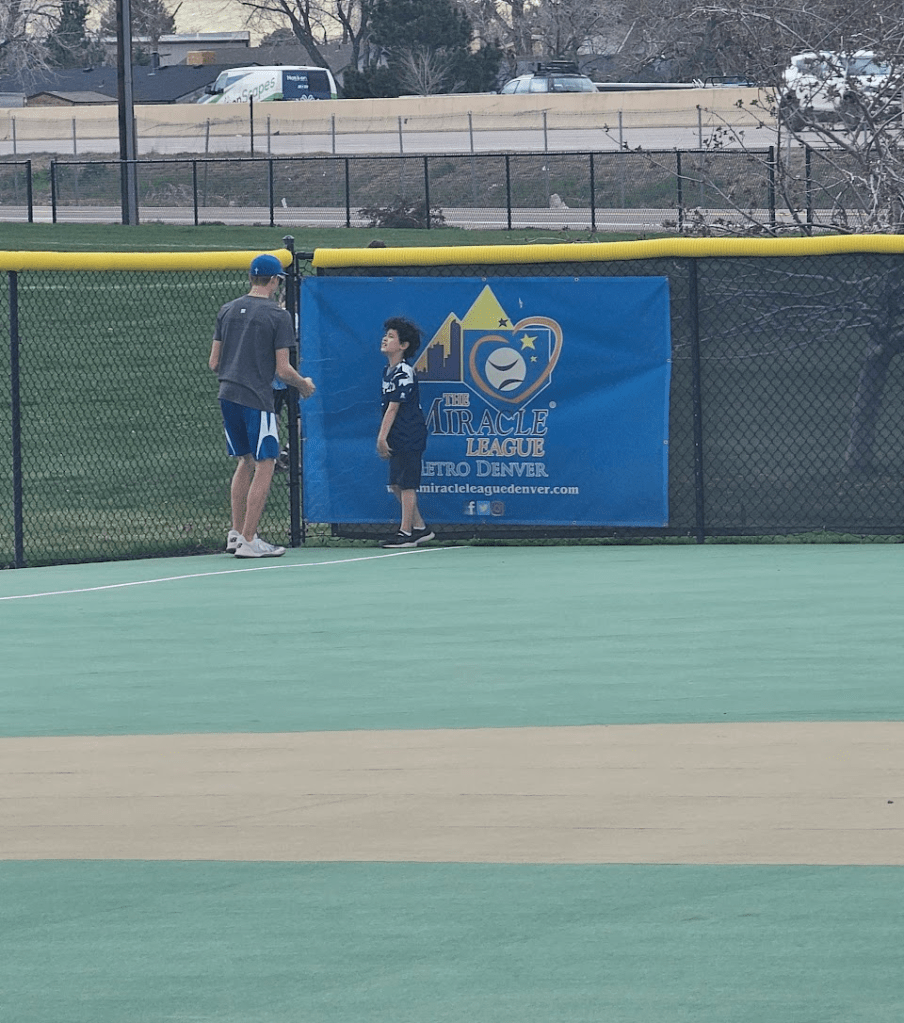
Saturday Miracle League started back up, which is a program made for individuals with mental and/or physical challenges to have an opportunity to play baseball.

We have been attending for a few years now. Our team and league is made up of a variety of abilities and disabilities, which I’ve always found beautiful. However, not many children with ASD.

Unlike the players with down syndrome, cerebral palsy, or other mental or physical challenge autism doesn’t have a look. And while my son may sit to the side, lays on the ground, runs back and forth, or vocal stim and loop scripts, many people just see a little boy.

I have encountered moments when I find myself explaining autism and invisible disabilities. Which I am happy to do but it also can feel like I’m justifying our presence. Overall everyone is usually so kind.

This was the first time I felt unwanted. As the new season kicked off, we welcomed some new players to the team. Two moms who knew each other outside of the league were chatting nearby, one new and the other returning.

I overheard the new mom praising the diversity of our team, while the other whispered a comment, gesturing towards the one other boy on our team with ASD. In all honesty I could not hear what was whispered,.

But I did hear her friend’s response, which was a graceful reminder that not all disabilities are visible.

I appreciated her response. However, I also sensed that some sort of judgment was made in that whisper about him being there, which I’m sure also included my son.

Both boys look typical to many people. For our family it’s something we often have to explain.

If you just look at J or saw him from across a room you likely wouldn’t think he has a disability. But once someone spends just a little bit of time with him they realize he is not a typical 9 year old boy.

I wanted to speak up, but I knew I had to tread carefully. I didn’t trust myself to refrain from overreacting or causing a scene.

Plus, it would have been clear I was eavesdropping—🤷‍♀️😏!

But! I wanted to ask, ‘Where are families like ours supposed to go? Where do kids like mine belong?’ ‘We can’t just join any typical baseball team; my son needs the support and understanding this league offers.’

I understand that the other mom may see her child’s abilities differently from mine, but it still stings to see certain kids, like my son, not feel welcomed or allowed.

I know not everyone feels the same as her but it sucks. It’s like we don’t belong anywhere.

It’s a reminder of the different perspectives we all bring to the table, and perhaps a lesson for us all to learn from.

She’s Everything I’m Not

Sometimes, I find myself thinking about her.

Her. The one who probably rises at 5 am to do something wild like go for a run or attend hot yoga.

Her time management skills are impeccable.

A Caesar salad is a treat for her, and she’s diligent about drinking water every day.

She excels at work and is fully present at home.

She thrives in the routine of each day.

She schedules appointments for herself and keeps them.

She knows which skincare products to use and what colors to wear.

She is perceived as put-together.

Does she exist?

Oh yes, I’m certain she does.

But who is she?

She is the one that embodies everything I’m not and perhaps a bit of who I envisioned myself to be as a woman and a mother.

But I am not her.

I hit snooze on the alarm and rush to get everyone ready in the morning.

I’m always running late or in a panic about being late.

A carb-loving, sugar-addicted l who oscillates between extreme restriction and indulgence.

I am dehydrated.

I feel the pull of the need to be at home working whatever little jobs I can but also terrified by the fact that I lack a career.

I lose myself, and perhaps my soul, in the monotonous repetition of parenting life.

I rarely make medical appointments for myself and then berate myself for it.

When I do get fully ready, I feel like a little girl with no clue about what I’m supposed to do.

I am a mess. A hot mess. Not the sexy kind, but the sweaty kind from running around looking for the remote.

Sometimes she pops into my mind. I contemplate how she handles things. If she even experiences real anxiety.

I know I am not her. I am me and I am okay with that.

I am a pretty good mom who worries endlessly about my children.

I do everything in my power to uplift them and reassure them of my love.

We confront autism and a blood disorder together because, at the end of the day, we can do hard things.

I adore my husband and his ability to make me laugh. He ensures the kitchen is clean every night and doesn’t judge me for leaving piles of laundry around.

I cherish my little family and how we strive to balance chaos and joy.

We have our meltdowns, arguments, worries, and fears. But amidst it all, we’re brimming with laughter, silliness, and the simple joy of being together.

I’m not implying that “she” doesn’t experience these things. Perhaps, somewhere out there, exists a mom who’s flawless. Who has it all and does it all. But all I can do is embrace myself. Some days, I try hard, and other days, I simply survive.

Bleeding Disorders Awareness

Last summer our youngest was diagnosed with Von Willebrand Disease Type 2, a bleeding disorder. Since March is Bleeding Disorders Awareness Month, I felt compelled to shed some light on it.

I understand that not everyone may read this entire post, so let me start by emphasizing that if you or your child bruises easily, experiences frequent nosebleeds or gum bleeds, or seems to bleed excessively, please consider requesting testing for a bleeding disorder. It’s not typically detected in a routine blood test, and since it’s hereditary, family members with similar symptoms you may want to get tested. There are three levels of severity of VWD, each requiring different treatments.

Blood disorders are relatively rare, yet many people may unknowingly have them. What we’ve discovered is that healthcare professionals often lack adequate knowledge about these conditions, placing the burden of education on patients and their families, which can be daunting. In my daughter’s case, she has always bruised easily, even since infancy, and occasionally suffers from nosebleeds that require prolonged pressure to stop.

Despite our concerns, her doctors initially dismissed these symptoms as trivial and reassured us that she would likely outgrow them. However, as she grew older, I I kept bringing it up with her pediatrician, who suggested the possibility of a blood disorder but didn’t express significant concern. 

After undergoing testing, primary doctors still didn’t seem too concerned saying that she’d likely just need medication before any procedures. However, upon consultation with a hematologist, we realized the gravity of the situation.

Suddenly, we found ourselves facing the risks of joint bleeds, prolonged bleeding, internal bleeding, and even the terrifying possibility of brain bleeds. Her blood doesn’t clot in the usual manner, significantly increasing the risk of severe bleeding episodes.

It will impact the sports and activities she can participate in, dictate where she can travel safely, and influence every medical decision she faces throughout her life.

We’re still navigating this journey, discovering that the medications required for treatment are tailor-made for each patient and come with a hefty price tag and that you can’t find at your regular pharmacy. We will be undergoing testing ourselves, though current indications suggest we may only be carriers, as we haven’t experienced bleeding issues.

It’s been heartbreaking, watching our little girl adapt to a new reality of frequent blood tests and soon infusions. My plea is to raise awareness of blood disease to ensure the safety of not only my child but also others facing similar challenges.