Some people mistake autism for “bratty” behavior. And to be fair, I understand why, on the surface, they can look the same.
A child melting down because they didn’t get their way might appear to be throwing a tantrum. But the truth goes much deeper. What often looks like defiance is actually a child struggling with emotional regulation, not one testing boundaries for attention.
Autism is a neurodevelopmental condition that affects communication, social interaction, and, crucially, regulation. Many autistic children, like my son, experience intense frustration or distress when routines change, expectations shift, or things don’t go as planned. This isn’t because they’re spoiled or haven’t been disciplined.
It’s because their brains process the world differently. Sometimes, I hear the whispers. The assumptions. People who don’t see a visible disability and decide it must be a lack of discipline, or parenting, or consequences.
But here’s what they don’t see: my son has spent a lot of his childhood in therapies, working incredibly hard to build the coping and self-regulation tools that come more naturally to other kids.
He still struggles when he loses a game or when something unexpected happens. And likely always will. That’s not because we haven’t tried. It’s because autism is, at its core, a regulatory disorder.
It affects how a child processes sensory input, manages emotions, and reacts to stress. So when you see a child melting down in public, pause before you judge.
What you might see as a tantrum could actually be a child doing their very best in a world that doesn’t always make sense to them.
I can fully, and without a trace of shame, admit that I don’t have many friends.
Making friends as an adult is hard.
As a mom, it’s even harder.
And as an autism mom? Multiply that by a million.
I’ve learned something over the years that no one really talks about: being a caregiver makes friendship complicated. It’s not that you don’t want to be a good friend—you do. But most days, you’re just trying to survive.
You’re navigating therapies, appointments, meltdowns, medications, school meetings, and the daily emotional labor of advocating for your child.
Friendships? They often get pushed aside. Not out of neglect, but out of necessity.
And yet, somehow, this journey has also made room for a different kind of friendship.
Over time, this journey has also brought friendship into my life.
I’ve met moms and parents who are in boats that look a whole lot like mine. Each of us navigates our own waves, but the overlaps help us understand one another in ways others can’t.
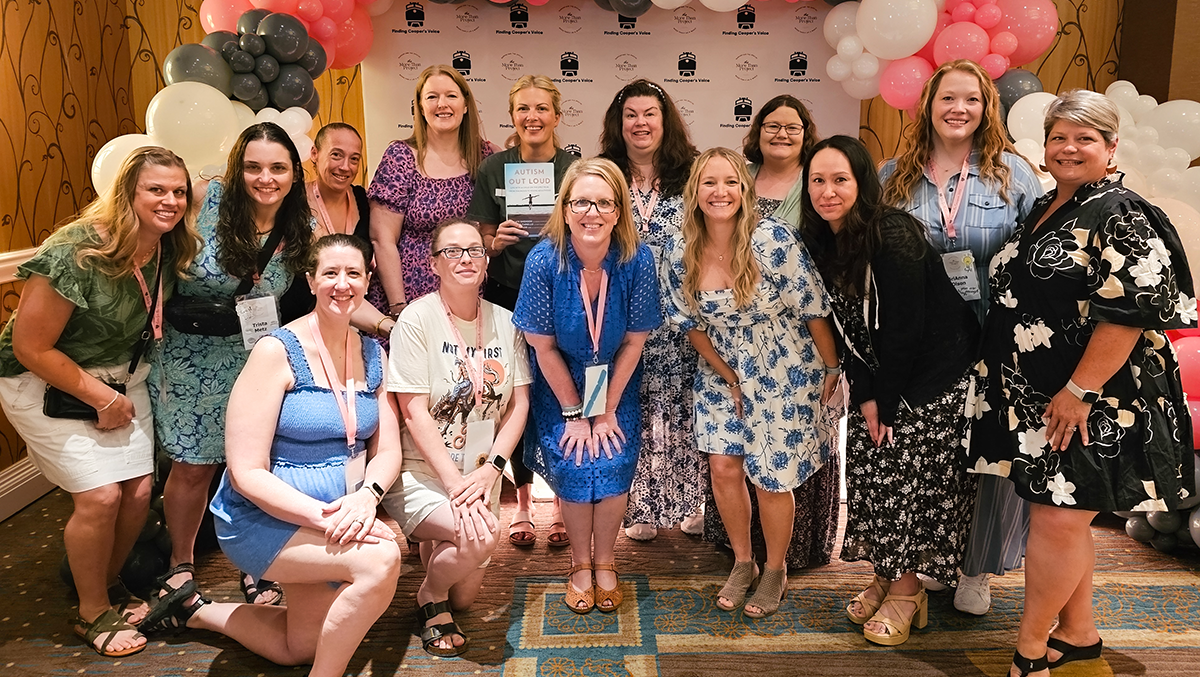
This past week, I had the incredible gift of attending a retreat with other caregivers—people who just get it, and the Care for The Caregiver Retreat.
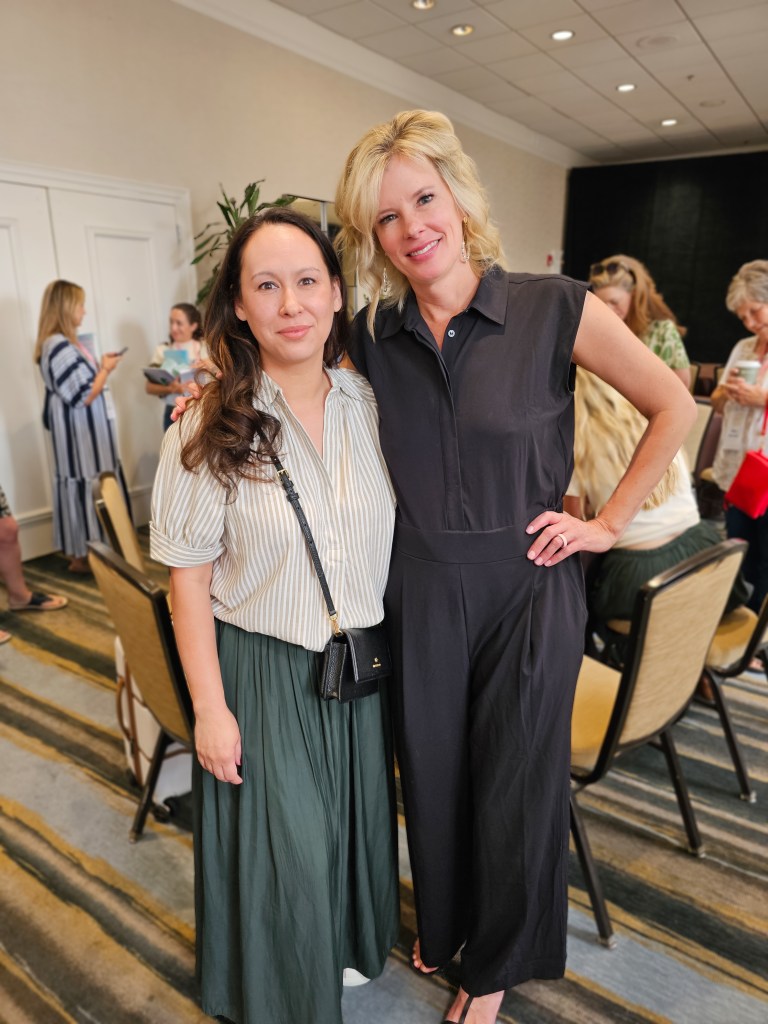
Some were women I’ve known for a few years, friendships formed through shared struggles and support. Others were new connections that somehow felt familiar from the start, common ground laid out.
These were women I could relate to in ways I can’t always manage in my day-to-day life.
Women who understand the rhythm of our world: the quick hellos, the brief check-ins, the “I see you” texts sent in between crises. Because sometimes, that’s all we have time for—and that’s okay.
Some of us sat down for quiet, child-free meals and just talked.
We listened. We shared.
We laughed about things that would make no sense to anyone outside this world we live in.
Some of us giggled at the wrong time, over something ridiculous, and felt mischievous again, like teenagers who snuck out past curfew.
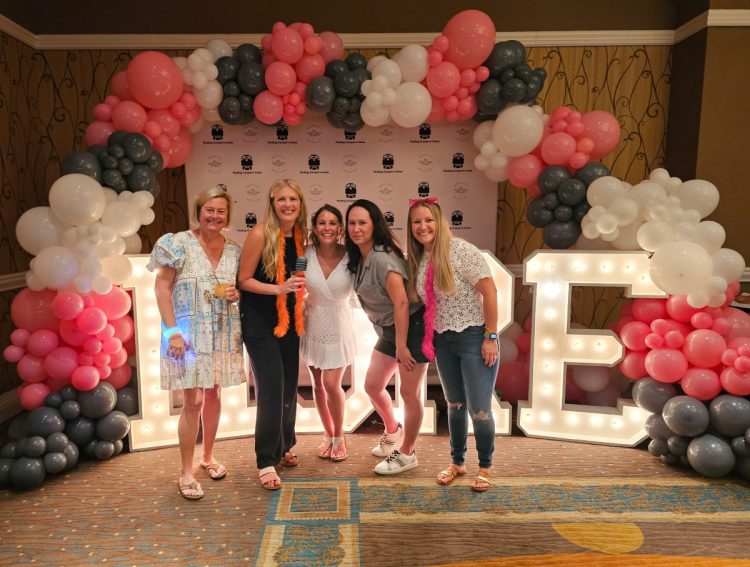
And some of us danced the night away, only to realize with great joy (and a little regret) that our knees no longer “get low” like they did in our twenties.
There were hugs and hellos.
Short and simple.
But filled with warmth and recognition.
People I admire and I honor.
This is the kind of friendship caregivers need.
Not the kind that demands constant maintenance or long phone calls.
But the kind rooted in deep understanding.
Friendship that shows up when it can.
Friendship that says, I see you.
Friendship that is both sometimes and always at the same time.
Inclusion is a word we hear often—taught in classrooms, written into mission statements, posted on school walls and company websites. Often claimed and not always properly supported or implemented.
And when you live in a world where inclusion isn’t a given—when your child depends on it just to access everyday moments—you begin to see it differently.
Inclusion isn’t just a concept. It’s something we live. And recently, I was reminded of that in two very different ways;
Not long ago, my son was quietly excluded from something. It was a small thing—something he wasn’t even aware of. But I was. And the people who left him out? They were people we thought we would could count on to include him. People we hoped were raising their kids to include others.
The exclusion itself hurt. But what stung more was the way some of the adults didn’t even recognize it as a problem. That kind of disregard hits hard—and lingers.
It would’ve taken so little to include him. And yet, it didn’t happen. That moment left me sitting with disappointment, frustration, and grief over something so seemingly minor, but deeply symbolic.
Just a few days later, I witnessed the opposite. And it was beautiful.
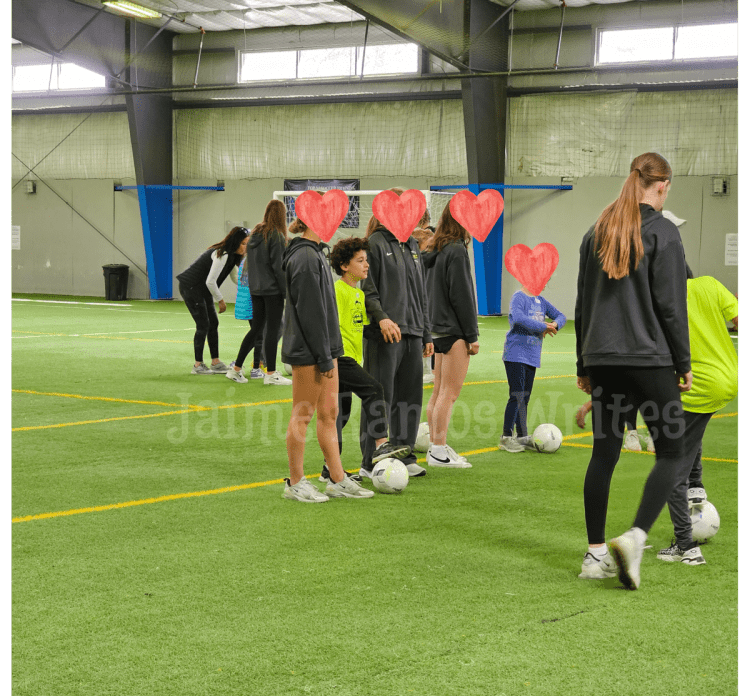
It was after a Taekwondo event that had already been emotionally taxing. I was standing in a stadium full of third graders and their parents, watching my son visibly struggle. His emotions were high, his behavior was challenging, and the space didn’t feel safe, I did not know what to do and what was going to happen.
Then, unexpectedly, a few of his classmates noticed. And they stepped up.
They didn’t shy away. They didn’t whisper or point. They stood by him. Even when he said things that weren’t kind. Even when he needed more space than most kids ever do they gave it him with kindness. Most of his classmates did give looks or tried to ignore it. But this small group of kids? They leaned in. They tried. It didn’t fix it or completely help but the effort healed part of me.
And I cried.
I’m protective when it comes to typical peers. We’ve had too many hard experiences. Sometimes, if I’m being honest, I expect the worst. But that day? It reminded me why I continue to hope.
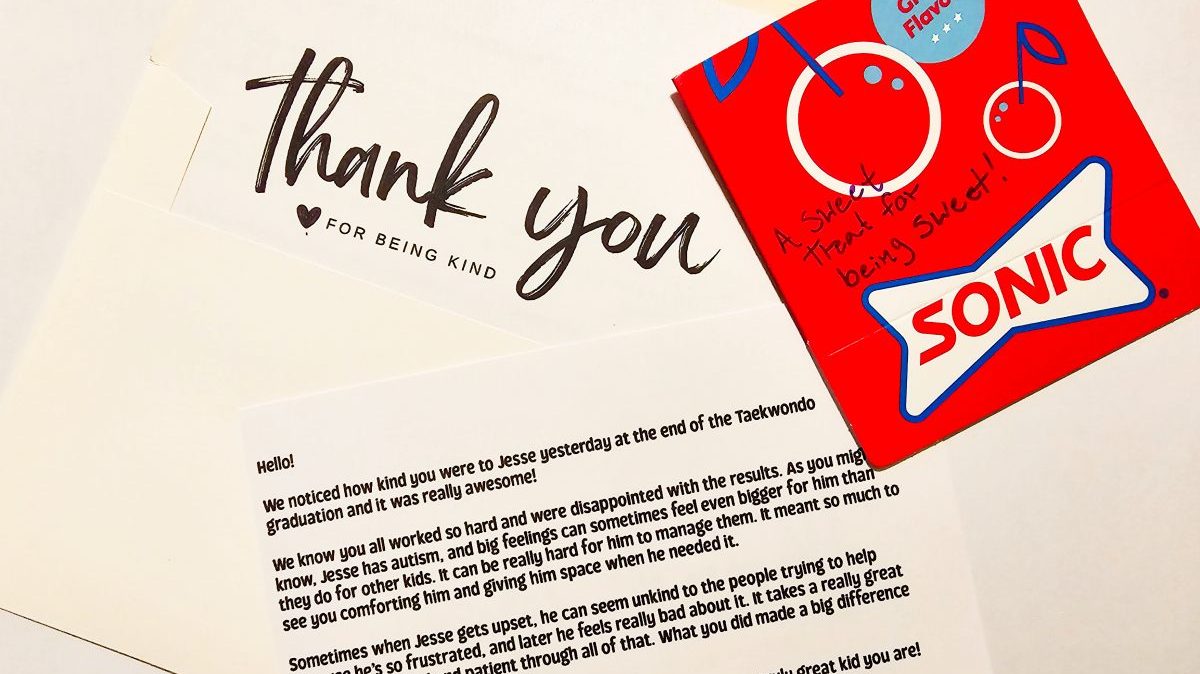
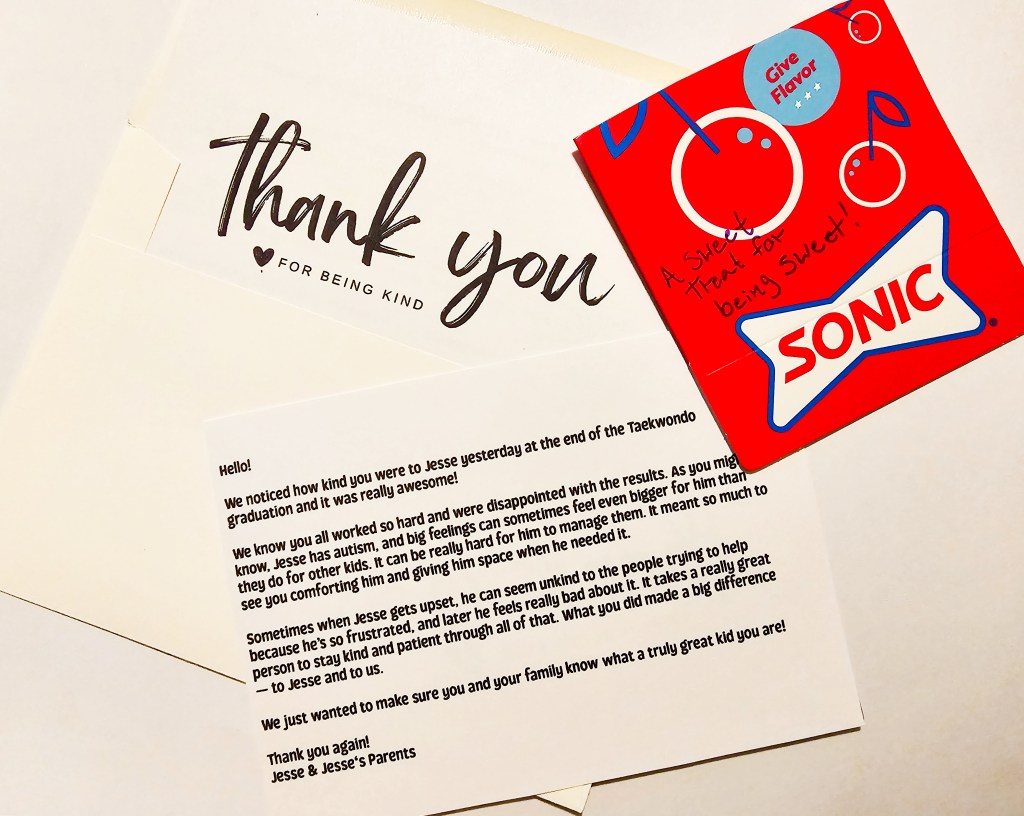
The next day, I sent thank-you notes and gift cards to each of those kids. I wanted them to know they had done something meaningful. Something extraordinary. I wanted to celebrate their empathy and make sure they remembered how much it mattered. Because what they did—that is inclusion.
Sometimes it costs more—more time, more energy, more resources. It can be messy, imperfect, and inconvenient. But sometimes it’s also beautifully simple. Sometimes inclusion is natural. Automatic.
In our world, inclusion has looked like:
A coach stepping up to lead a team designed for kids with disabilities.
A friend making sure there’s a quiet space in their home during social events.
A kid making sure ours has a turns when other kids take advantage of his silence.
A school that opens the sensory room during a dance—just for one child.
A teacher who takes the time to let us know about “typical” events, just in case we want to try.
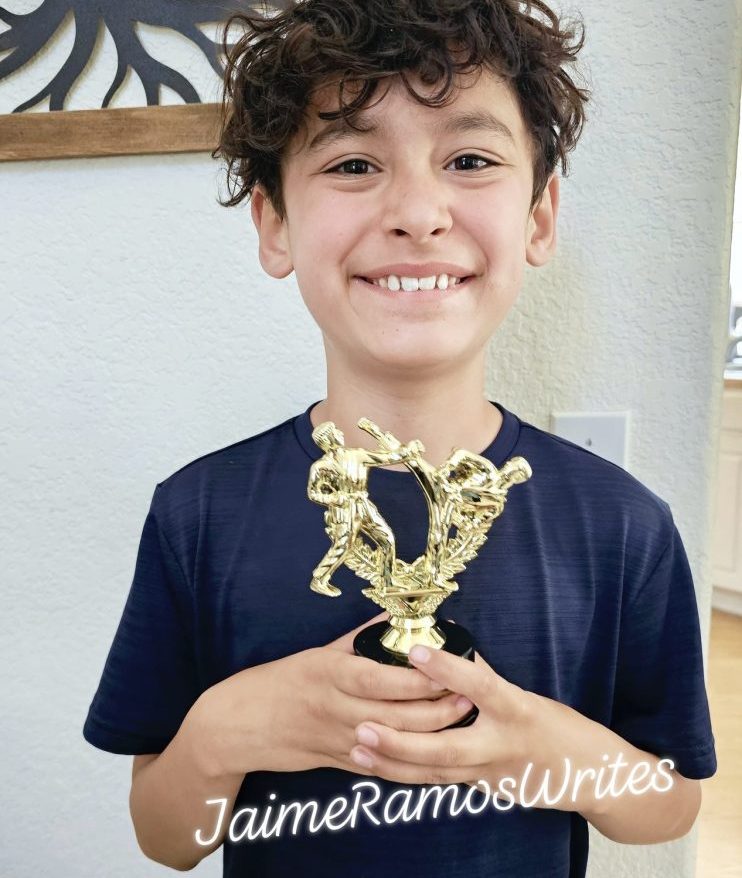
A friend from across the country who sends a trophy to a kiddo who was heartbroken about not getting one.
A family that offers us grace and space on vacations, without judgment.
A soccer buddy who holds my son’s hand the entire game without being asked.
These moments are gifts. They are choices people make to see, to understand, to show up differently.
Inclusion is a mindset. It’s a willingness to see someone and stay. It’s not about perfection. It’s not about getting everything right. It’s about trying. About showing up. About choosing compassion—especially when it would be easier to look away.
If we want our kids to grow into adults who include, we can’t just talk about it. We have to show it. Live it. Name it when we see it. Encourage it when it happens.
Because inclusion is kindness, it’s really seeing someone, it’s love.
Last week, my autistic son J participated in a Taekwondo graduation and competition with his school, joined by five others. Hundreds of third graders gathered on a big field to show off what they’d learned in a Taekwondo program.
When we first heard about the program, I wasn’t sure how it would go. I didn’t have high hopes, but I was excited for him to just try. It replaced a day of PE for several weeks, and our main hope was that J could stay in the room. He did. He would try for a bit, get distracted, need redirection, but we were proud. He was proud. Even at the little school ceremony a few weeks ago, standing next to typical peers, it was a bit hard, but we celebrated him and he was proud.
But this day was different.
Something about the size of the event — six schools, the energy of all the kids — seemed to make it more real for him. J rose to the occasion in ways I never expected.
He stayed mostly in his spot for the full hour-long event. He tried 90% of the moves and gave most of the vocal responses. As I sat in the stands, blinking back tears behind my sunglasses, I thought, I never saw this coming. It was amazing.
There are two things I want you to know about J:
He really wants to participate with his peers. He just doesn’t always have the concentration or control to do so.
He believes he must do certain things, even when they’re difficult or he doesn’t want to. This can be good — like getting through an airport — but it can also make things harder when something out of his control happens, like a plane is delayed or he can’t complete a task.
This time, there were trophies up for grabs. J has always loved the idea of trophies and medals, like the ones he sees in cartoons.
J believed his school was supposed to win. He needed that trophy.
But his school didn’t win a trophy.
The moment the last trophy was handed out, I knew. I could see his tears from where I sat. I could see the anger, too. The para didn’t notice at first. A sweet classmate did and tried to talk to him. I felt helpless, watching from a distance, wishing I could reach him faster as it was all building.
It was a very sad, very public meltdown.
I gave him space, then stepped in. He ran up a hill, and I ran after him. Some of his classmates, bless them, tried to comfort him. It touched my heart to see them care. But J kept escalating, running farther away, and I followed. At one point, a classmate looked up at me and said, “J is fast!” I had to laugh. “Tell me about it, kid.”
Eventually, the para and I got him to a calm place, and to my surprise, he managed to get on the bus. I knew people would say I should have taken him home, but in his mind, he was supposed to ride the bus. If I had taken him with me, it could have made everything worse. Plus, I knew he was in good hands. He needed to finish what he started.
Once I knew he was safe, snacks in hand, I climbed into my car and cried. I cried the whole way home. I cried as I told my husband about it.
I cried because I was so proud of my son — proud of how hard he worked, proud of the way he showed up.
I cried because of the kindness of the kids around him. They showed kindness even when he wasn’t nice and I know that’s not easy.
I cried because nothing is ever easy. Every win seems to come with a cost.
I cried because I want so much for him, and sometimes I don’t know how to give it to him.
We sit in a middle ground with autism. J can participate, sometimes, but it takes a lot of understanding from those around him. I don’t know how that will look 10 years from now.
But I’m learning how to push him. I’m learning how to sit with the discomfort that comes in moments like today. I know his life won’t be sheltered forever. He may never be fully independent, but he will have to live in the real world.
Later, we talked to J about what happened. He was angry about the trophy. He was disappointed they didn’t get first place. We told him how proud we were of how well he did. We reminded him that trying his best was the real win, and we hoped he felt proud of himself, too.
It was a short conversation, as most of them are with him.
And I was torn. Should I just buy him a trophy?
From the moment I got in the car after, I said I wouldn’t do it. In the past, I would have immediately jumped to soften the blow — buying him the toy he couldn’t find, tracking down a rare video he remembered from years ago, anything to make his hard life a little easier.
But I’m trying to prepare him for life. I won’t always be able to fix things. I won’t always be here to make it easier.
Yet as we talked, I realized something. That day, J earned a trophy.
Not because he should have won and the judges were wrong, the right school won today — but because he outdid every expectation we had. Because he tried so hard. Because he stayed when everything in his body wanted to move. Because he worked harder just standing there, being there, than many kids did performing.
And right now, while I am still here — I will buy him a trophy.
Because, he earned it.
The trophy I ordered is still on the way but now he’ll have two because a friend sent this as soon as she heard.
I’ve lost count of how many times I’ve tried to explain autism— What it means. What it looks like. What it feels like to live alongside it every day.
And every time, the words fall short.
If I ever made a documentary about autism, I’d call it Autism Is…
I’d talk to everyone—autistic individuals, parents of autistic kids and adults, siblings, therapists, teachers, friends, co-workers. Anyone and everyone whose life has been touched by autism.
And I’d ask them just one question: “Finish the sentence: Autism is…”
I can already imagine the answers.
Some would be just one word. Some, many. Some would sound clinical. Some would sound like poetry. Some would be hopeful. Some would be hard to hear. Some might just be, “I don’t know.”
Because every person carries a different experience. For some, autism is personal. For others, it’s a sibling, a student, a co-worker, a child. And some only know what they’ve been told.
I used to think I had to find the right words. The perfect way to explain it—to family and friends, to strangers, to professionals, to myself.
But the longer I live with it, the more I realize: Autism doesn’t fit in a word or even a sentence.
It shifts. It grows. It contradicts itself.
Still, if I had to try… here’s how I’d finish the sentence today:
Autism is loud. Autism is quiet. Autism is pure joy. Autism is sorrow.
Autism is beautiful. Autism is the unknown. Autism is grief. Autism is tight hugs.
Autism is dysregulation. Autism is dancing in the rain. Autism is laughter. Autism is panic.
Autism is seeing the world differently. Autism is confusion. Autism is looping. Autism is isolation.
Autism is the deepest bond. Autism is the little wins. Autism is the big wins. Autism is the regression.
Autism is love.
Autism is complicated.
And my little boy is complicated. He isn’t just autism. It’s a part of him—touching every corner of his being—but it’s not the whole story.
He is also him.
He loves the first snow— how it softens the world, how it lands on his face like a little kiss.
He watches rollercoasters with fascination, tracking every twist and drop, memorizing their paths like he’s always known them.
He studies maps and landmarks, finding comfort in knowing where things are— as if anchoring himself in a world that rarely feels predictable.
He laughs at funny videos and reads silly books with his dad, his belly-full giggles echoing with joy.
He sits close—right next to you— elbow pressed to yours, shoulder to shoulder, as if to say, “Don’t move. I need you right here.”
He is sad not to have friends— you can see it in his quiet questions and lingering glances at the playground— but he doesn’t quite know how to be a friend yet. He doesn’t want to give up his space or his way.
He wants to see the world. He talks about cities, landmarks, amusement parks. But the noise, the crowds, the unpredictability— they pull at his anxiety.
He loves to cuddle. “I need a hug,” he whispers late at night. As if to say, “I need you. I need comfort. I need regulation and love.”
He is a part of my heart I didn’t know was missing. He has changed me. And I know him—his looks, his sounds, his needs— maybe better than I know myself.
The way he moves through the world has taught me to slow down. To listen harder. To love deeper.
So if you asked me today to finish the sentence, I’d say: Autism is love I never expected, in a world I’m still learning to understand.
And maybe tomorrow, I’ll say something else entirely. Because Autism is… like my son—growing, shifting, and impossible to define.
I was thrown into the deep end—but I didn’t even know it at the time. In the beginning, I had no idea that my beautiful baby boy had autism spectrum disorder. So naturally, I thought I was doing everything wrong.
Nothing in the parenting books or the blogs seemed to help. So, I assumed the problem was me.
What I didn’t realize was that the people writing those books and blogs were parenting, and only talking about, neurotypical children. Their experiences weren’t mine. Their advice didn’t fit.
I’ve heard stories from families who say they raised their autistic child the same as their other kids. That they didn’t treat them any differently and that it was beneficial.
Maybe they didn’t have to. But for us, we did. We do.
For us, yes, through no real fault of my own, I was parenting “wrong.” I was parenting my child the wrong way—because he needed his own way.
And even that wasn’t going to make autism, and all that comes with it, go away.
We only have two children, and sometimes I wonder how different things would have been if my daughter had come first.
Would she have fit neatly into the boxes outlined in those parenting guides?
Would I have had a routine in place, a clearer sense of what was “typical”?
Would I have noticed the signs in my son sooner?
Maybe all the plans I had for traditions and routines wouldn’t have been forgotten—scrapped in favor of survival and adaptation.
Maybe it all would have felt a little less chaotic.
But that’s not how it happened. And the truth is, I don’t know what would have happened.
What I do know is this: we raise both of our children differently.
Differently from each other, and differently from how most people raise their kids.
Because autism changes everything in a family—even when only one person has it.
I try to divide my time evenly.
I try to validate everyone’s feelings.
I fail. I know I do. But we try.
Motherhood, for me, started in chaos.
And if I’m honest, I don’t think I’ve ever fully found my footing.
But maybe that’s okay. Maybe that’s just part of our rhythm.
Because somewhere in the middle of the meltdowns and the milestones, the appointments and the unexpected joys, I changed too.
I became softer in some ways and stronger in others.
I’ve learned to hold plans loosely and moments tightly.
I see things now that I never would’ve noticed before—
like the quiet victories that come after hard days,
or the beauty in a connection that doesn’t need words.
Autism has stretched me.
It’s broken my heart and rebuilt it again.
It’s forced me to grow in ways I never asked for—
but also gifted me with a deeper kind of love.
One that sees beyond the surface and knows how to stay.
Every April, Autism Acceptance Month rolls around, and with it, I find myself hoping—hoping that this year, maybe things will be different. That maybe, just maybe, people will take a moment to listen, to learn, to be kind. That maybe we can combine awareness and genuine acceptance.
My Hopes for Autism Acceptance Month This Year
1. That People Take the Opportunity to Learn
Autism isn’t a one-size-fits-all diagnosis. It’s a spectrum, and no two autistic individuals are exactly the same. My biggest hope is that people take the time to understand this—that they realize how deeply individual autism is.
More than that, I hope people learn how to support autistic individuals in a way that actually helps. Not based on assumptions, but on listening to autistic voices and their families to understand that support should be tailored to the person, not the label.
2. That People Choose Kindness
If there is one simple thing I wish for this month, it’s kindness. A pause before judgment.
If you see someone struggling in public, a child overwhelmed, a caregiver desperately trying to help someone, choose kindness. Maybe that person isn’t just “being rude.” Maybe that child isn’t “misbehaving.” Maybe that parent isn’t “too soft.” Maybe, just maybe, there’s more to the story than you realize.
A smile instead of a stare. A moment of patience instead of a snap judgment. It costs nothing, but it means everything.
3. That We Teach the Younger Generation
I’ll be honest—when it comes to certain adults, I’ve lost hope a little bit. There have been too many moments where I’ve been met with indifference, ignorance, or outright dismissal, even from people I thought would understand. Five years of shouting from the rooftops, and sometimes it feels like no one is listening.
So instead, I’ve turned my focus to the next generation. If I can’t change every adult’s mind, maybe I can help shape the way kids grow up thinking about autism. I want my son’s peers to understand him, to accept him—not out of obligation, but because they truly see and value him.
I hope that by teaching them now, they’ll carry that understanding into adulthood. That acceptance won’t just be something we talk about in April, but something that is woven into the fabric of who they become.
Because at the end of the day, autism acceptance isn’t about changing autistic people to fit the world—it’s about changing the world so that autistic people don’t have to fight for a place in it.
And that, more than anything, is what I hope for.
4. That Acceptance Leads to Action
Awareness is good. Acceptance is better. But real change happens when acceptance turns into action—when schools, workplaces, and communities move beyond simply acknowledging autism and start making real efforts to be inclusive.
It’s one thing to say, “We accept autistic individuals,” but another to ask, “How can we support them in meaningful ways?” That means advocating for better resources, creating sensory-friendly spaces, and ensuring that autistic people have the accommodations they need to thrive—not just in childhood, but throughout their lives.
Because true acceptance isn’t passive. It’s something we do, not just something we say.
I hope everyone finds a way to better understand Autism this month.
Something that makes me feel—maybe even seem—like a terrible mother.
Sometimes, I see another boy. Another version of mine.
A boy with friends. A boy who jumps into life without hesitation. One who plays sports, cracks jokes, and navigates the world like any other ten-year-old. A child unburdened by dysregulation and anxiety.
A boy without autism.
He lingers like a ghost. Sometimes, I catch glimpses of him in my son. Other times, he takes shape in the kids around us—neurotypical boys his age.
A child free from the hard things this disability brings.
And he is my shame. The quiet, unspoken grief I carry. The whisper that makes me wonder if I’ll ever be the mother I should be.
I love my son completely. I wouldn’t trade him for anything. Autism hasn’t weakened our bond—it’s made it unbreakable. We need each other in ways most people wouldn’t understand.
But still, that other boy lives deep in my mind. A boy free from loneliness. Free to simply be. To laugh with friends. To embrace life without fear. To be a little boy.
School, learning, and reading have all been struggles. Autism manifests in so many different ways, and for J, the pressure of school—being forced to sit still and engage with things he has no interest in—creates a tough combination for learning.
I remember the relief when he started preschool and suddenly, there was a whole team of people helping him learn. At home, it always led to frustration for both of us.
To this day, homework, projects, and reading remain challenging. J likes to do things on his own terms, in his own way and if he doesnt like its a battle.
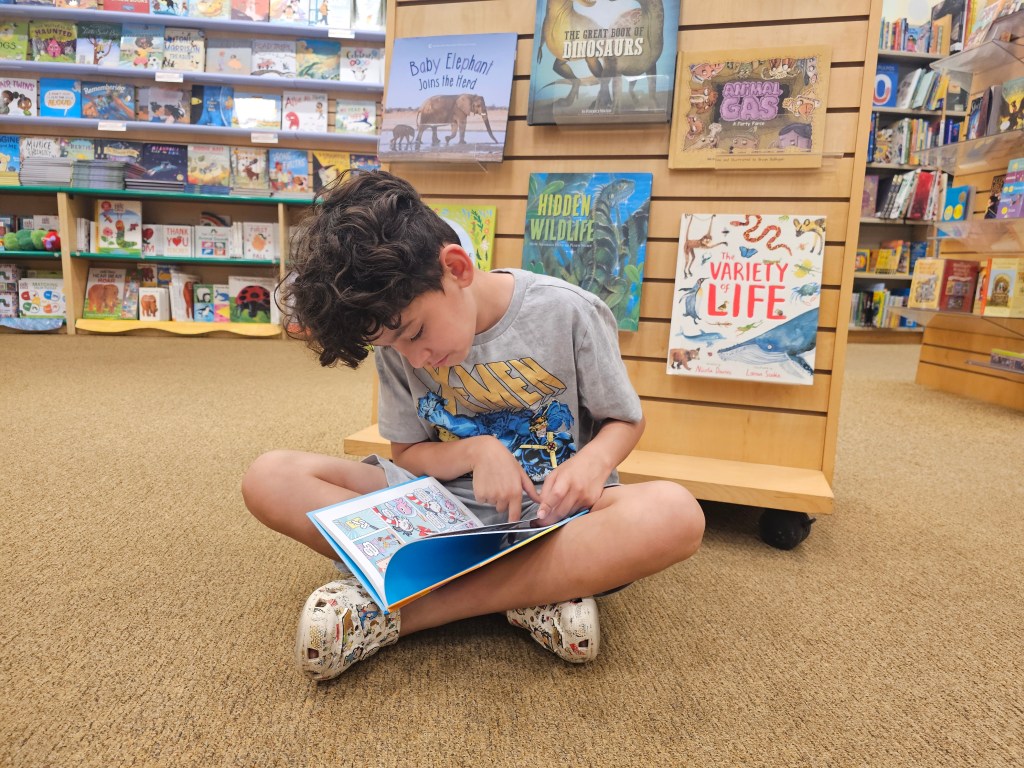
About a year ago, I completely gave up trying to make him read. I know that might sound bad, but I worried that whatever interest he did have in books would disappear completely. I didn’t want reading to become something he dreaded.
I love books now, but it wasn’t always that way. I’m dyslexic, and I remember the fear of reading in class, the embarrassment when it didn’t come easily. Books weren’t something I could love—they were tied to anxiety and struggle.
It took time, but I eventually fell in love with story and that helped me become a reader. When I could read at my own pace, without pressure I found out made them so wonderful. That love of books, along with some amazing teachers, helped me learn to read better—my way.
J has always shown an interest in books, and I wanted to nurture that. So, instead of pushing him to read, we changed our approach. My husband and I would read aloud, sometimes asking J to read a word here and there. Sometimes he resisted, but sometimes he didn’t. We let him choose books that interested him and celebrated them—just enough, but not too much (because that would ruin it, lol).
So, for the past year, we’ve focused on nurturing his love of books—just letting them exist in his world on his terms. No pressure. Just presence.
I hope this grows. I hope his reading skills develop in their own time so he can find the same solace in books that I have. And maybe, just maybe, it will one day translate into more writing, more expression—giving voice to the words that sometimes feel hard for him to get out.
There’s a small moment from years ago that has always stuck with me. Even now, it makes me feel sad and a little guilty. But I also think it perfectly captures where I was in my journey through motherhood at the time.
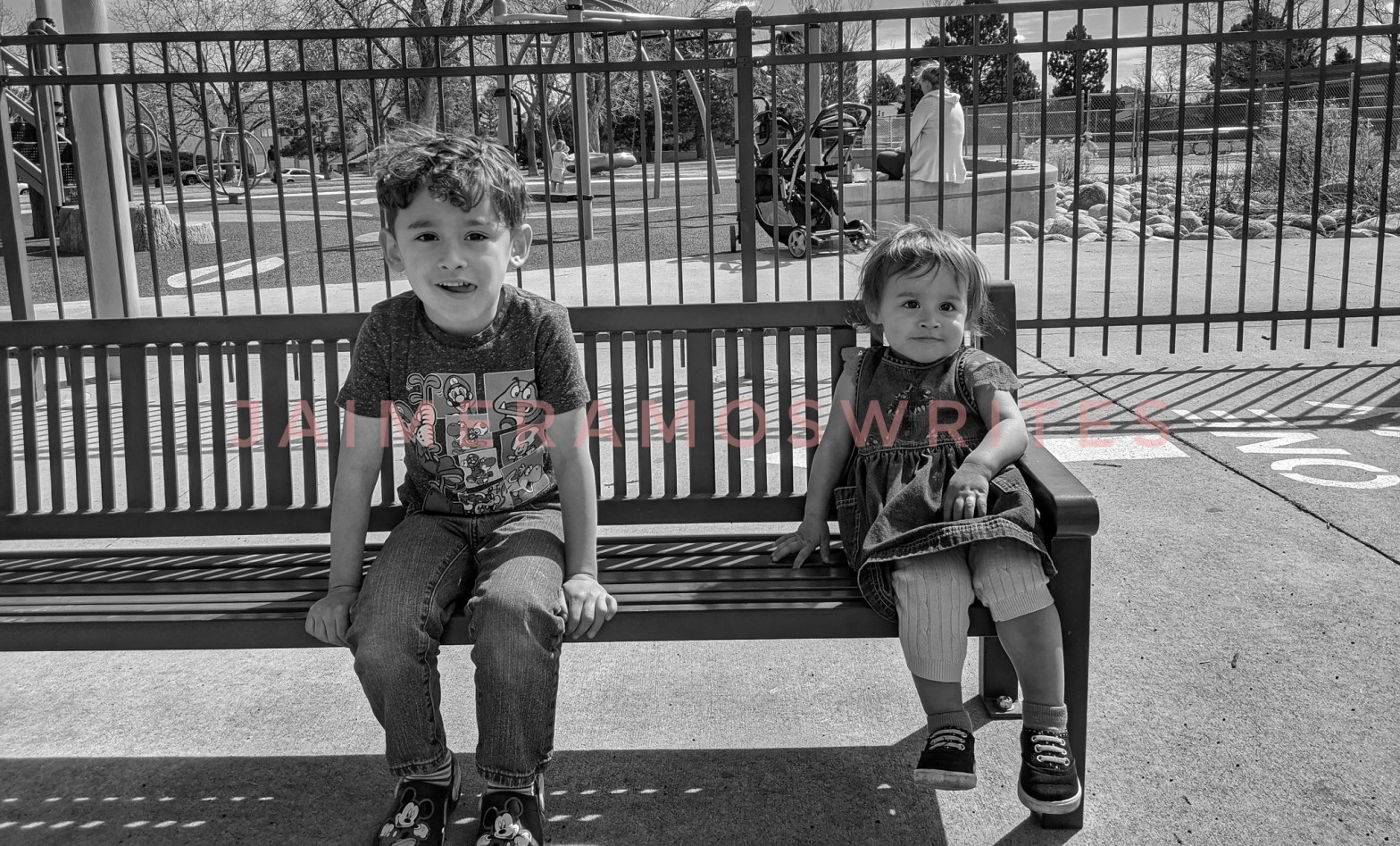
My husband and I had taken our kids—our son, about five, and our daughter, around two—to a playground. I never did outings like this alone because my son, who is autistic, would elope (run off) often. The second he took off, someone had to be ready to chase after him before he reached a street, a pond, or another dangerous place.
By the time we even arrived, I was already exhausted. Everything was hard. Getting both kids dressed, getting in the car, getting out of the car safely. I was constantly on edge, trying to keep my son regulated while also pushing him—gently—to experience new things and just the regular things. I had to strike this impossible balance of not overwhelming him but also not shielding him too much.
That day at the playground, there was a rare moment of peace. Both kids were playing in their own ways on the equipment. My husband and I stood close, always on alert, ready to intervene if needed. But, for once, nothing had gone wrong. No eloping, no screaming.
A mom with kids around the same ages as mine stood next to me. I gave her that awkward, polite “we’re both here with our kids” kind of smile. She smiled back and said something I’ll never forget:
“They are so cute. Isn’t this life just the best?”
I forced a smile. “So cute,” I said. And that was it.
But inside, I remember thinking, This is not the best. My life is exhausting.
I wanted to tell her that this calm moment was an exception, not the norm. That I spent most of my time anxious, worried, and terrified for the future. That I felt isolated, overwhelmed, and heartbroken. That I wasn’t happy.
Looking back, I feel sad—and guilty—that I felt that way. But the truth is, life was hard. Parenting was hard. Autism was hard.
I wish I could go back and tell that version of myself that it was okay to feel that way. That the exhaustion, the fear, and the isolation didn’t mean I was failing. It just meant I was carrying more than most. And maybe, if I had let myself say it out loud, I would have felt a little less alone












 jaimeramoswrites.com