
Inclusion is a word we hear often—taught in classrooms, written into mission statements, posted on school walls and company websites. Often claimed and not always properly supported or implemented.
And when you live in a world where inclusion isn’t a given—when your child depends on it just to access everyday moments—you begin to see it differently.
Inclusion isn’t just a concept. It’s something we live. And recently, I was reminded of that in two very different ways;
Not long ago, my son was quietly excluded from something. It was a small thing—something he wasn’t even aware of. But I was. And the people who left him out? They were people we thought we would could count on to include him. People we hoped were raising their kids to include others.
The exclusion itself hurt. But what stung more was the way some of the adults didn’t even recognize it as a problem. That kind of disregard hits hard—and lingers.
It would’ve taken so little to include him. And yet, it didn’t happen. That moment left me sitting with disappointment, frustration, and grief over something so seemingly minor, but deeply symbolic.
Just a few days later, I witnessed the opposite. And it was beautiful.
It was after a Taekwondo event that had already been emotionally taxing. I was standing in a stadium full of third graders and their parents, watching my son visibly struggle. His emotions were high, his behavior was challenging, and the space didn’t feel safe, I did not know what to do and what was going to happen.

Then, unexpectedly, a few of his classmates noticed. And they stepped up.
They didn’t shy away. They didn’t whisper or point. They stood by him. Even when he said things that weren’t kind. Even when he needed more space than most kids ever do they gave it him with kindness. Most of his classmates did give looks or tried to ignore it. But this small group of kids? They leaned in. They tried. It didn’t fix it or completely help but the effort healed part of me.
And I cried.
I’m protective when it comes to typical peers. We’ve had too many hard experiences. Sometimes, if I’m being honest, I expect the worst. But that day? It reminded me why I continue to hope.
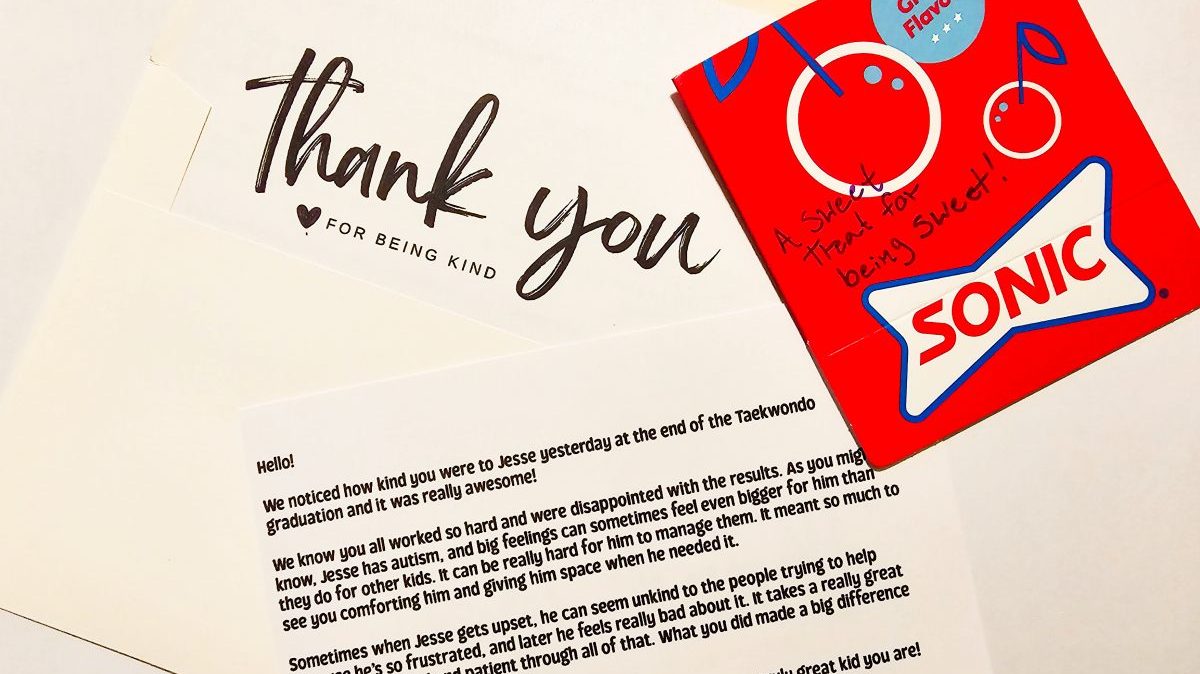
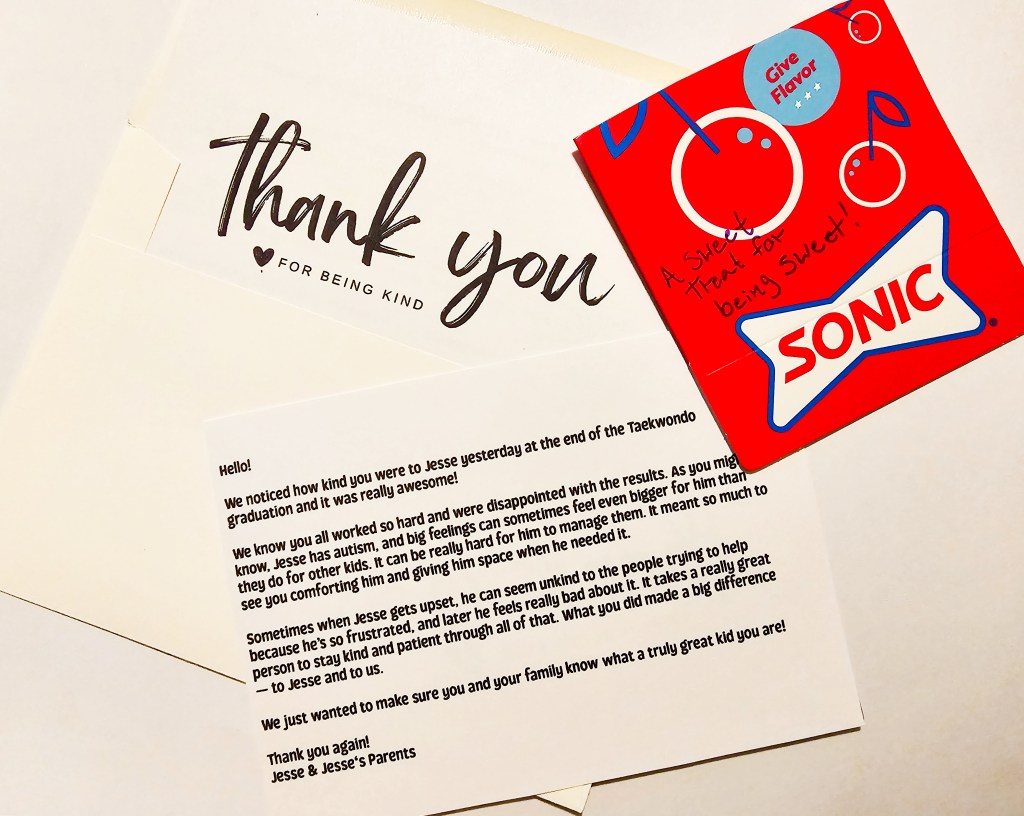
The next day, I sent thank-you notes and gift cards to each of those kids. I wanted them to know they had done something meaningful. Something extraordinary. I wanted to celebrate their empathy and make sure they remembered how much it mattered. Because what they did—that is inclusion.
Inclusion isn’t always loud or dramatic. Sometimes, it’s quiet. Thoughtful. Intentional.
Sometimes it costs more—more time, more energy, more resources. It can be messy, imperfect, and inconvenient. But sometimes it’s also beautifully simple. Sometimes inclusion is natural. Automatic.
In our world, inclusion has looked like:
A coach stepping up to lead a team designed for kids with disabilities.
A friend making sure there’s a quiet space in their home during social events.
A kid making sure ours has a turns when other kids take advantage of his silence.
A school that opens the sensory room during a dance—just for one child.
A teacher who takes the time to let us know about “typical” events, just in case we want to try.
A friend from across the country who sends a trophy to a kiddo who was heartbroken about not getting one.
A family that offers us grace and space on vacations, without judgment.
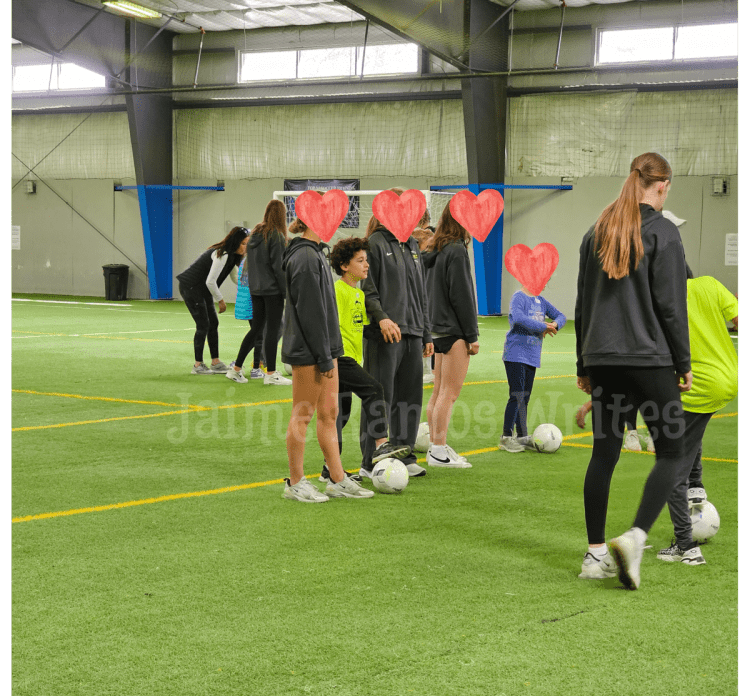
A soccer buddy who holds my son’s hand the entire game without being asked.
These moments are gifts. They are choices people make to see, to understand, to show up differently.
Inclusion is a mindset. It’s a willingness to see someone and stay. It’s not about perfection. It’s not about getting everything right. It’s about trying. About showing up. About choosing compassion—especially when it would be easier to look away.
If we want our kids to grow into adults who include, we can’t just talk about it. We have to show it. Live it. Name it when we see it. Encourage it when it happens.
Because inclusion is kindness, it’s really seeing someone, it’s love.

 jaimeramoswrites.com